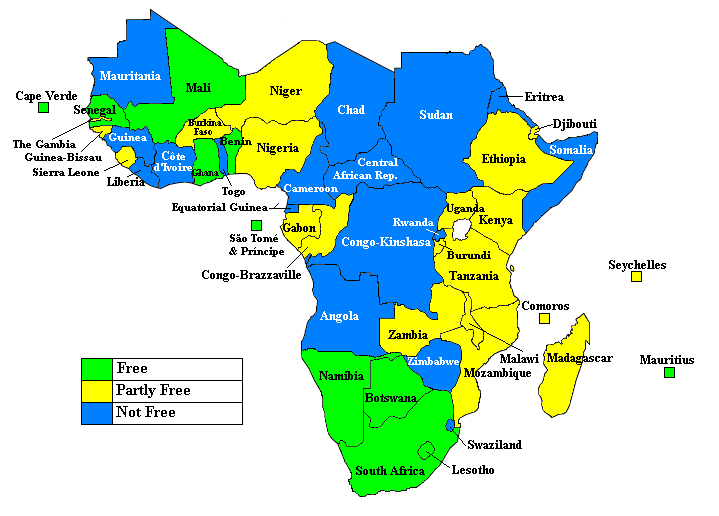
Table of African Countries*
Comparative Measures of Freedom
  up or down indicates a change in Political Rights, Civil Liberties, or Status since the last survey. In the Table, click
on the number preceding the arrow for an explanation of the rating and/or status change in the selected country. A rating
of 1 represents the most free and 7 the least free rating. up or down indicates a change in Political Rights, Civil Liberties, or Status since the last survey. In the Table, click
on the number preceding the arrow for an explanation of the rating and/or status change in the selected country. A rating
of 1 represents the most free and 7 the least free rating.
  Trend Arrows indicate general positive or negative trends since the previous survey that are not
necessarily reflected in the raw points and do not warrant a ratings change. Trend Arrows indicate general positive or negative trends since the previous survey that are not
necessarily reflected in the raw points and do not warrant a ratings change.
|
Trend |
Country |
Political Rights |
Civil Liberties |
Status |
|
_ |
Angola |
6 |
5 |
Not Free |
|
_ |
Benin |
2 |
2 |
Free |
|
_ |
Botswana |
2 |
2 |
Free |
|
_ |
Burkina Faso |
4 |
4 |
Partly Free |
|
_ |
Burundi |
5 |
5 |
Partly Free |
|
ß |
Cameroon |
6 |
6 |
Not Free |
|
_ |
Cape Verde |
1 |
1 |
Free |
|
_ |
Central African Rep. |
7 |
5 |
Not Free |
|
_ |
Chad |
6 |
5 |
Not Free |
|
_ |
Comoros |
5 |
4 |
Partly Free |
|
_ |
Congo-Brazzaville |
5 |
4 |
Partly Free |
|
Ý |
Congo-Kinshasa |
6 |
6 |
Not Free |
|
_ |
Côte d'Ivoire |
6 |
5 |
Not Free |
|
_ |
Djibouti |
5 |
5 |
Partly Free |
|
_ |
Equatorial Guinea |
7 |
6 |
Not Free |
|
_ |
Eritrea |
7 |
6 |
Not Free |
|
_ |
Ethiopia |
5 |
5 |
Partly Free |
|
ß |
Gabon |
5 |
4 |
Partly Free |
|
_ |
Gambia |
4 |
4 |
Partly Free |
|
_ |
Ghana |
2 |
2 |
Free |
|
_ |
Guinea |
6 |
5 |
Not Free |
|
_ |
Guinea-Bissau |
6 |
4 |
Partly Free |
|
_ |
Kenya |
3 |
3 |
Partly Free |
|
_ |
Lesotho |
2 |
3 |
Free |
|
Ý |
Liberia |
6 |
6 |
Not Free |
|
_ |
Madagascar |
3 |
3 |
Partly Free |
|
_ |
Malawi |
3 |
4 |
Partly Free |
|
_ |
Mali |
2 |
2 |
Free |
|
_ |
Mauritania |
6 |
5 |
Not Free |
|
_ |
Mauritius |
1 |
2 |
Free |
|
_ |
Mozambique |
3 |
4 |
Partly Free |
|
_ |
Namibia |
2 |
3 |
Free |
|
_ |
Niger |
4 |
4 |
Partly Free |
|
_ |
Nigeria |
4 |
4 |
Partly Free |
|
_ |
Rwanda |
6 |
5 |
Not Free |
|
_ |
São Tomé & Príncipe |
2 |
2 |
Free |
|
_ |
Senegal |
2 |
3 |
Free |
|
_ |
Seychelles |
3 |
3 |
Partly Free |
|
_ |
Sierra Leone |
4 |
3 |
Partly Free |
|
_ |
Somalia |
6 |
7 |
Not Free |
|
_ |
South Africa |
1 |
2 |
Free |
|
_ |
Sudan |
7 |
7 |
Not Free |
|
_ |
Swaziland |
7 |
5 |
Not Free |
|
_ |
Tanzania |
4 |
3 |
Partly Free |
|
_ |
Togo |
6 |
5 |
Not Free |
|
_ |
Uganda |
5 |
4 |
Partly Free |
|
Ý |
Zambia |
4 |
4 |
Partly Free |
|
ß |
Zimbabwe |
6 |
6 |
Not Free |
*The ratings in this table reflect global events
from 1 January 2003 through 30 November 2003.
Criteria for designation as an Electoral Democracy
1. A competitive, multiparty
political system.
2. Universal adult suffrage
for all citizens (with exceptions for restrictions that states may legitimately place on citizens as sanctions for criminal
offenses).
3. Regularly contested
elections conducted in conditions of ballot secrecy, reasonable ballot security, and the absence of massive voter fraud that
yields results that are unrepresentative of the public will.
4. Significant public
access of major political parties to the electorate through the media and through generally open political campaigning.
Status and Ratings Changes, Trend Arrow
Explanations
Cameroon
received a downward trend arrow due to increased government repression of the media.
Cape Verde's
civil liberties rating improved from 2 to 1 due to modest improvements in women's rights.
Central African Republic's
political rights rating declined from 5 to 7, and its status from Partly Free to Not Free, due to a March military coup that
ousted a civilian president and suspended the National Assembly.
Congo-Brazzaville's
political rights rating improved from 6 to 5 due to the signing of an apparently durable cease-fire agreement in March that
has helped stabilize the country's fragile political environment.
Congo-Kinshasa
received an upward trend arrow due to the inauguration of a two-year transitional government and the establishment of a unified
national military.
Côte d'Ivoire's
civil liberties rating improved from 6 to 5 due to a reduction of hostilities following the signing of a ceasefire.
Djibouti's
political rights rating declined from 4 to 5 due to a legislative election in which opposition parties were significantly
disadvantaged by electoral rules and the use of government powers of incumbency.
Gabon
received a downward trend arrow due to the lifting of term limits for the president and increased repression of the media.
Ghana's
civil liberties rating improved from 3 to 2 due to increased openness in civic discourse and general improvements in the respect
for human rights and the rule of law.
Guinea-Bissau's
political rights rating declined from 4 to 6 following a military coup, while its civil liberties rating improved from 5 to
4 because of a general easing of arrests of political opponents and interference in the judiciary.
Kenya's
political rights and civil liberties ratings improved from 4 to 3 due to positive post-2002 election developments in 2003,
including a constitutional review process, an anti-corruption campaign, and efforts to strengthen judicial independence.
Liberia
received an upward trend arrow due to a ceasefire and the departure of President Charles Taylor that led to an easing of violence
and repression.
Madagascar’s
civil liberties rating improved from 4 to 3 due to the country’s progress in recovering from widespread civil strife.
Malawi's political rights
rating improved from 4 to 3 due to the defeat of a controversial bid to lift term limits for the presidency and the nullification
of a law that limited the rights of lawmakers.
Mali's
civil liberties rating improved from 3 to 2 due to modest improvements in human rights, including legislative reform and efforts
to eliminate child trafficking.
Mauritania's
political rights rating declined from 5 to 6, and its status from Partly Free to Not Free, due to presidential elections that
were held in an atmosphere of intimidation and were not conducted fairly.
Nigeria's
civil liberties rating improved from 5 to 4 due to an abatement of violence between Muslim and Christian communities that
had beset the country in 2002.
Rwanda's
political rights rating improved from 7 to 6 due to the passage of a new constitution permitting political pluralism, and
presidential and legislative elections that reflected a modest amount of political choice
São Tomé & Príncipe's
political rights rating declined from 1 to 2 due to a brief military coup in July.
Sierra Leone's
civil liberties rating improved from 4 to 3 due to improved security in the country and increased pressures to punish those
guilty of war crimes.
Swaziland's
political rights rating declined from 6 to 7 due to the adoption of a constitution designed to entrench more deeply the institution
of rule by royal decree.
Uganda's
political rights rating improved from 6 to 5 due to a Constitutional Court ruling removing key restrictions on political party
activity.
Zambia received
an upward trend arrow due to the formal inclusion of civil society groups in the country's constitutional review process and
the president’s aggressive efforts to root out government corruption.
Zimbabwe received
a downward trend arrow due to government repression of political opponents, civil society activists, and independent media
representatives.
|
 |
|
|
|
|
|
|
|
|
|